
Program Preview
(all times are PST)
Full agenda coming soon!
Sunday, April 26 | 5:00pm-6:30pm | Welcome Meet and Greet
Monday, April 27 - Wednesday, April 29 | 8:00 am – 5:00 pm | main program and hands-on sessions | discovery stations | networking and social events during and after programming
Thursday, April 30 | 8:00 am – 12:30 pm | Tax Technology Sandbox: Learn by Doing (Optional Extended Hands-On Learning | Additional Registration Required)
Sessions Preview:
- From Vision to Value: Why Tax Technology Transformations Stall and How to Restart Them
- Hear from leaders at the heart of steering transformational change on their successes and struggles when leading through change, tips and traps uncovered, combating false starts or failed adoptions and how to re-ignite, distinguishing enablement from training, and more in charting transformations for lasting impact.
- Emerging Technology Panel - Perspectives from Incubation Leaders
- Stay ahead of the curve with a forward-looking panel discussion on the next wave of emerging technologies set to disrupt tax operations. From API connectors to agentic AI, experts will unpack what’s on the horizon, how early adopters are leveraging innovation, and which tech capabilities will unlock new value for tax departments in the years ahead.
- Reinventing Tax Through AI: Perspectives from Tax Innovators
- Perspectives from field experts and in-house tax on the “now and next” on AI in tax and its impacts on technology investments, talent strategy, data security, risks and controls, as well as practical advice on how organizations are integrating AI into their tax functions today
- AI Governance, Deployment and Current Regulation
- Explore the critical components of responsible AI deployment in tax. This session will cover governance models, regulatory compliance, risk mitigation, and ethical considerations in using AI. Gain insights into how to balance innovation with control while aligning with current and upcoming global regulations.
- Governance, Change Management, and Upskilling for a Digitally Enabled Tax Department
-
Sustaining a digital transformation requires more than new technology—it demands structure, talent development, and cultural alignment. This session explores how governance, change management, and upskilling come together to ensure long-term success in a modern, tech-enabled tax organization.
Participants will gain insights into designing Centers of Excellence (COEs), establishing governance standards, and building hybrid teams that combine tax and technology expertise. The discussion will also address how to measure adoption, foster accountability, and create scalable training pathways that empower professionals at every level
By connecting people, process, and technology, this session provides a roadmap for building a resilient and future-ready tax department capable of continuous improvement and sustainable transformation.
-
- Building a Resilient Tax Function: Strategies for Continuity & Knowledge Retention
- In a world where tax teams face turnover, evolving complexity, and increasing reliance on specialized expertise, building a resilient and sustainable function has never been more important. This session brings together leaders from technology, tax consulting, and in‑house tax departments to explore practical strategies for knowledge retention, process continuity, and succession planning. Learn how organizations are capturing institutional knowledge, designing durable processes, closing skill gaps, and using technology to create accessible and reusable “bottled knowledge” that strengthens team capability and reduces operational risk.
- Driving Transformation in Tax: Trends, Talent, and Tech
- Hear perspectives from in-house tax technology leaders as to how people continue to be a critical factor into their tax technology journeys. We will discuss how the components of people, process, and technology each play a role and how they can influence each other within a tax technology strategy and operating model, recent trends and catalysts impacting their approach, and where recent efforts have been focused to further tech capabilities of the tax function.
- E‑Invoicing Everywhere: The Tech, the Data, and the Competitive Edge
- E‑invoicing is rapidly becoming the new operating layer for indirect tax compliance, moving many countries from periodic audit to near‑real‑time controls. This session provides a concise global view of emerging mandate models, core technology and integration choices, and the critical data elements tax teams must influence to stay compliant and competitive.
- From Transactions to Returns: Real‑Time Reporting and the Future of Indirect Tax Compliance
- As tax authorities move to real‑time and near‑real‑time controls, the traditional indirect tax return is being fundamentally reshaped. This session explores how continuous transaction controls, e‑reporting, and digital audit models are changing the end‑to‑end indirect tax process. The discussion focuses on how tax teams can adapt processes, data flows, and operating models to remain compliant, efficient, and audit‑ready in an increasingly digitized environment.
- Evolving SOX Controls for Automation” to “SOX x Automation: Rethinking Risk, Controls, and Walkthroughs
- As tax departments automate more processes, SOX expectations are evolving just as quickly. In this session, experts from Deloitte are joined by in‑house tax technology leaders who will break down how automation reshapes risk, controls, documentation, and walkthroughs. Hear practical guidance on designing SOX‑ready automated processes, anticipating what internal and external auditors will focus on, and ensuring your technology, evidence, and control environment can stand up to scrutiny.
- The Agentic Tax Function: What’s Real, What’s Hype, and How Tax Teams Are Actually Using It Today
-
Over the last year, “AI agents” have become one of the most talked-about topics in tax technology — but most tax departments are still trying to figure out what these tools really can do and where they meaningfully improve tax work. This session cuts through the noise.
We’ll walk through practical examples from companies experimenting with agent-driven processes today, and break down what worked, what didn’t, and what teams wish they had known before getting started. We’ll also explain, in plain English, how agent-based systems differ from copilots or traditional automation, and what this means for staffing, controls, and day-to-day processes inside the tax function.
Attendees will leave with a grounded view of where agents can help right now, where the technology is still maturing, and how to evaluate use cases without getting swept up in hype.
-
- Finding the ROI in Generative AI
- As generative AI moves from pilot programs to operational deployment, tax executives need frameworks to evaluate solutions and measure actual business impact. This panel brings together corporate tax leaders who have implemented AI tools to discuss their evaluation criteria, the metrics they tracked, and the results they're seeing. Panelists will share what ROI looks like in their practice—from time savings and capacity gains to unexpected benefits and challenges—providing attendees with practical benchmarks and lessons learned for their own AI initiatives.
- Bridging Automation and AI: Building Smarter Tax Workflows
-
This session will explore how tax departments can enhance efficiency and accuracy by combining automation platforms with tailored tax technology solutions. We will discuss practical ways to connect ETL and workflow automation tools with purpose-built tax applications to streamline data management, compliance, and reporting processes.
Participants will see how integrating data automation and specialized tax tools can create scalable, repeatable processes that improve governance, visibility, and decision-making. The discussion will also highlight emerging trends—such as generative AI and predictive analytics—and how these capabilities can be integrated into existing tax workflows to extend value without requiring deep technical expertise.
This session aims to provide a grounded, practical look at what’s working in tax technology today, emphasizing approaches that meet tax professionals where they are and enable transformation through accessible, secure, and adaptable tools.
-
- AI for Tax: Practical Use Cases, Control Frameworks, and Where Humans Must Stay in the Loop
- Generative AI and large language models are reshaping how tax teams research issues, prepare disclosures, and automate repetitive tasks — but they introduce new governance and accuracy risks. This panel separates hype from helpful: practical AI use cases that reduce cycle time, the compliance controls you must add, and a clear human-in-the-loop design pattern for reliable outcomes. Includes practical examples: invoice OCR → NLP extraction for VAT, SKU classification for tax engines, and contract clause ingestion for disclosure drafting. We’ll cover essential guardrails: confidence thresholds, human‑in‑the‑loop gates, and audit logging. Attendees will leave with a framed checklist for piloting AI safely in tax operations and a decision matrix for which tasks to automate now versus later.
- Cloud Data Management: Enabling Automated, Centralized, and Scalable Solutions
- Discover how modern cloud data management empowers organizations to efficiently store, integrate, govern, and utilize data across enterprise platforms. In this engaging webinar, we’ll cover key strategies and showcase innovate solutions for tax-sensitive data.
- Enterprise-Grade Tax Data Management
-
Enterprise data lakes promise scale, but tax is rarely at the center of those implementations. So how can tax deliver enterprise-grade data management without owning the enterprise tech stack? This session explores how tax can deploy middleware strategies to aggregate, govern, and optimize data using tools such as Alteryx (including Alteryx One), Dataverse, and Power Platform. Alongside enterprise transformation cycles, tax can build a governed, scalable data layer that integrates across systems.
Topics include:
• Optimizing tax data within the enterprise “Silver” layer, with the latest from enterprise data providers like Snowflake, Databricks and Fabric
• Using middleware to centralize and govern data without heavy IT infrastructure
• Creating scalable, cloud-managed tax datasets that support automation, reporting, and AI
-
- Smart Automation, Low Cost: Rediscovering Classic Technologies for Direct Tax
-
In an era about enterprise AI investment, many finance and tax budgets have remained flat. In this paradigm, tax functions continue to seek effective automation strategies that can deployed on a low budget and position their tax processes for future automation.
This session will demonstrate what can be achieved within a constrained budget without large-scale IT expenses or interference, leveraging tactics in tools like:
• Microsoft PowerQuery, PowerPivot, Power BI
• Alteryx Designer
• Thomson Reuters and Corptax connectors for workpapers and automated workflows
-
- Unlocking Tax Potential with Google AI
- Explore how Google's AI tools are transforming the tax function. This session features a live demonstration showcasing real-world applications of Google AI in tax workflows, including data analysis, document review, and compliance. Attendees will gain insights into immediate opportunities for automation and efficiency using Google's latest AI capabilities, with practical examples that can be applied directly to their work.
- Copilot + APIs: Unleashing Intelligent Automation and Advanced Tax Solutions
- Step into the future of tax technology with this in-depth session on the transformative power of Copilot and APIs. Beginning with an exploration of Copilot Studio's foundational capabilities for building intelligent assistants, the session quickly progresses to advanced integration techniques. We will showcase innovative strategies for combining APIs with Copilot to create next-generation tax solutions that enhance data accessibility, automate complex workflows, and deliver significant productivity gains. This session is designed for tax professionals eager to leverage cutting-edge tools for unprecedented efficiency and strategic value.
- AI Bubble or AI Breakthrough? From Hype to Hands on in Tax with Microsoft Fabric, Copilot, AI Agents & Power Apps
-
As artificial intelligence continues to dominate headlines, tax leaders face a critical question: Is AI a passing trend or a transformative force for the tax function? This session will cut through the hype and deliver a grounded, strategic perspective on AI adoption in tax.
Drawing from real-world experience in tax automation and innovation, we’ll explore how to evaluate AI opportunities with a clear-eyed view—balancing ambition with practicality. Beyond theory, this session will showcase how Microsoft’s ecosystem can accelerate your AI journey, from Fabric’s data foundation to AI Agents, Copilot, and Power Apps for building intelligent workflows.
Attendees will gain insights into:
• How to distinguish between AI buzzwords and meaningful capabilities
• Key criteria for assessing AI solutions in the context of tax operations
• Building a scalable, future-proof AI roadmap aligned with business and compliance goals
• Lessons learned from early adopters and common pitfalls to avoid
• The role of data architecture and governance in enabling AI success
• Practical examples of leveraging Microsoft tools—Fabric for data, Copilot for productivity, AI Agents for automation, and Power Apps for custom solutions
-
- From Hype to Impact: Making Smart Tax Technology Investment Decisions Tax Forecasting and Predictive Analytics: Technology to Model Forward
- In today’s fast‑moving tax technology landscape, tax leaders are constantly faced with new tools, platforms, and “next‑big‑thing” solutions—often without clear guidance on what is truly worth the investment. This session brings together a smart‑buyer mindset with a practical understanding of the technology hype cycle to help tax teams make informed, value‑driven decisions. Participants will learn how to cut through market noise, evaluate where technologies sit on the hype‑to‑maturity curve, and prioritize investments that align with their tax and enterprise desired outcomes. Through real‑world perspectives, the speakers will explore how to manage a growing tax technology stack, avoid over‑investing in immature solutions, and guide tax teams through change—from initial excitement to sustainable impact. Attendees will leave with a clearer framework for navigating emerging tax technologies and spending their tech budgets wisely.
- From Cost Center to Catalyst: Turning Tax into a Revenue Engine
- Discover how forward-thinking tax leaders are using automation and data intelligence to shift their teams from reactive compliance to proactive growth partners. Learn the tangible business impacts of this transformation—from earning a bigger budget to securing a true seat at the strategic table.
- AI-enabled Automation: Success Stories and Lessons Learned from the OpenAI Tax team
- Hear directly from the OpenAI tax team on the AI-powered use cases they've built, the productivity gains they've achieved, and the hard-won lessons that can accelerate your own automation journey.
- Transformation in the Age of AI
- AI is no longer a future aspiration for tax—it is becoming part of the day‑to‑day operating environment. As AI moves from pilots into production, tax leaders are discovering that the real challenge is not the technology itself, but how it reshapes the tax department.
- AI Transformed Tax Processes: Real-World Tax Transformation with AI Automation
- Hear how AI Automation is transforming tax operations through real-world before-and-after customer use cases. This session will showcase how organizations are replacing manual spreadsheets and fragmented workflows with governed AI automation to accelerate tax processes, improve accuracy, and deliver audit-ready results at scale.
- From Ideas to Automation: Using AI to Build Like a Citizen Developer
- Discover how AI can help non-technical professionals harness the power of advanced tools without writing a single line of code. Learn practical strategies to automate tasks, generate scripts, and translate business logic into working code using AI assistants.
- NextGen Dataflows for Tax: Where Data Engineering Meets Tax Innovation
- Modern tax teams are rethinking how data is sourced, staged, transformed, and delivered using next‑generation dataflows, unified data lakes, orchestrated pipelines, and notebook‑driven engineering. This session explores emerging data architectures and practices that are reshaping how tax technology teams design scalable, high‑quality data environments. Hear what leading innovators are experimenting with, how data pipelines can be orchestrated more efficiently, and the components of a modern tax data ecosystem.
- Tax Forecasting and Predictive Analytics: Technology to Model Forward
- Tax teams typically begin with actual financial results to create tax deliverables that fulfill reporting requirements. Technology allows for utilizing tax inputs and results beyond actuals, providing opportunities for improved forecasting, scenario planning, and analytics with the support of AI. This session will present practical examples of using historical data and technology to enhance these processes. Tax teams have traditionally relied on historical actuals to deliver accurate and compliant reporting, but today’s business environment increasingly demands earlier insight and greater agility. Advances in technology now allow tax inputs and outputs to be leveraged beyond actuals, enabling improved forecasting, scenario planning, and analytics. In this session, we will explore how tax teams can use historical data, modern analytics tools, and AI‑enabled capabilities to better anticipate outcomes such as effective tax rates, jurisdictional impacts, and planning scenarios. Through practical, tax‑focused examples, participants will learn how predictive approaches can enhance insight, support decision‑making, and align tax more closely with broader finance and business planning—while maintaining appropriate judgment and control.
- Modernized Tax Provision Process: Technology That Moves the Needle from Outputs to Outcomes
- Discover how tax teams are modernizing the tax provision process to a tech‑enabled, outcome‑focused model. This panel will explore where emerging technologies, smarter process design, and better‑leveraged data are transforming provision calculation, review, reporting, and controls. Hear practical advice to identify friction points and accelerate turn-time during close while improving data integrity, controls and getting more out of the data used through the provision and forecast cycles.
- Reinventing Tax Through AI: Perspectives from Tax Innovators
- Hear directly from the leaders driving AI initiatives within and for tax departments in this interactive, future‑focused panel discussion. Join AI program leaders and tax innovation experts as they share real-world insights on how artificial intelligence is transforming tax functions today—and what’s on the horizon. Learn how leading organizations are modernizing processes, evolving their data and technology foundations, and rethinking talent strategies to unlock the full potential of an AI-empowered tax function.
Hands-On Sessions
These 2-hr hands-on labs run concurrently with breakout sessions Mon-Wed. These options are available to anyone registered for the 3-day seminar but do require advanced sign-up (coming soon once the full Agenda page is loaded). Space is limited for all hands-on spaces (wait list option will show when full).
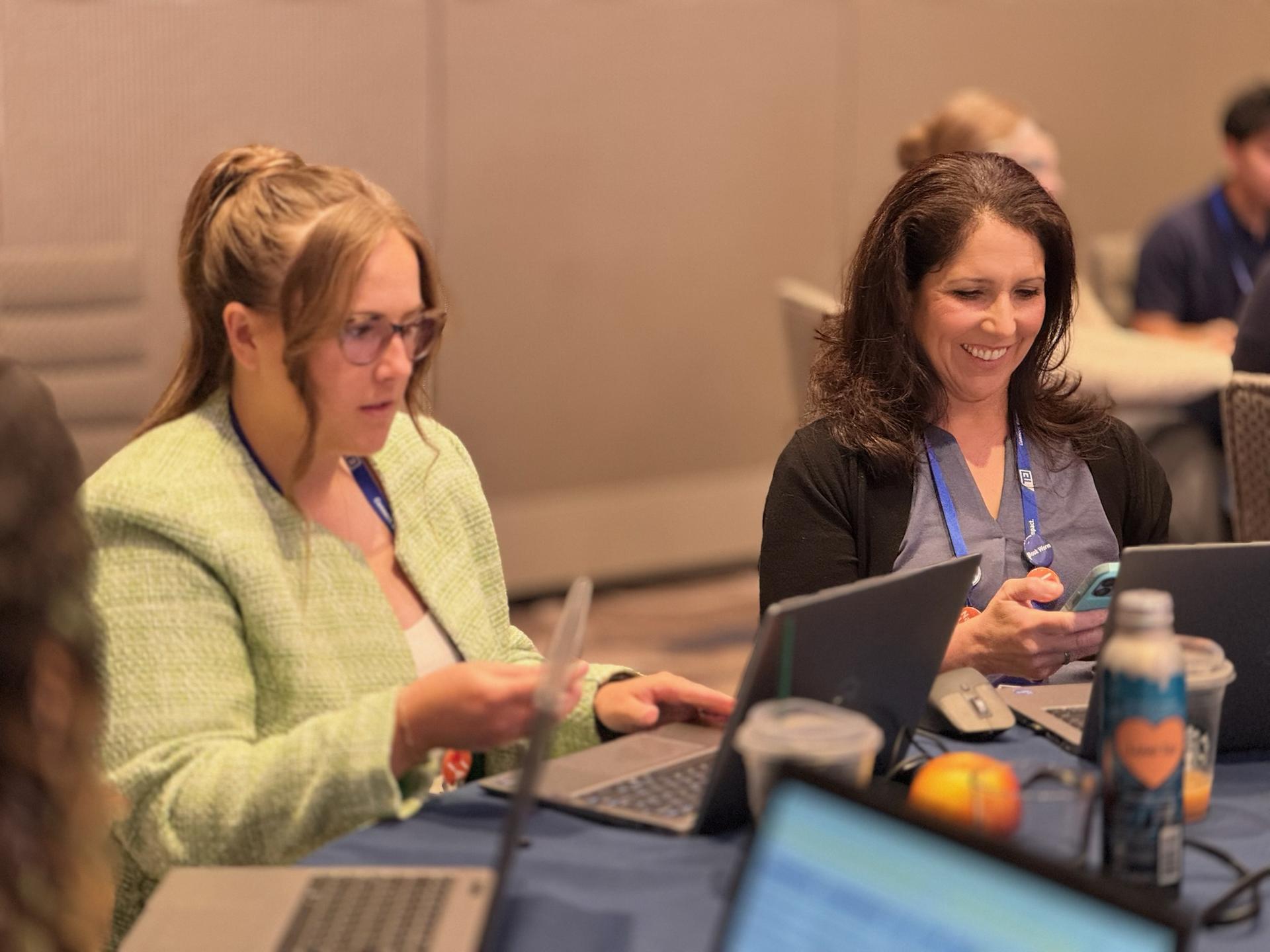
- Prompt Engineering for Tax
-
AI is here to stay, but using it effectively can still be a challenge. This Lab will use Accordance to examine the principles of good prompting and provide helpful techniques to streamline tax research, enhance financial analysis, and draft professional communications. We'll highlight areas where folks are seeing the most benefit with Accordance and generative AI more generally with the goal of increasing the efficiency and productivity of your team.
'- Understand the fundamental principles of prompt engineering
- Develop effective prompt techniques for any generative AI
- Outline the key differences between Accordance and other AI solutions
- Identify best practices for maximizing accuracy and efficiency with prompts and chaining prompts
- Guided hands-on exercises in tax research and analysis
Tech Requirements: Participants will need their own laptop. All exercises are through web-browser with trial license provided by Accordance. Participants should confirm whether a browser-based, trial license use is permitted within their organization if using a company-issued device.
No coding or additional software installation required. All data sets and files for the hands-on exercises will be provided.
-
- AI-enabled Tax Review - Practical Lab pairing GenAI Prompts & Excel
-
Tax teams frequently inherit large Excel models with limited documentation and embedded assumptions. This hands on lab demonstrates how generative AI can act as a first pass analyst, helping tax professionals quickly understand unfamiliar workbooks, surface risks, trace calculations, and translate technical outputs into clear review narratives. In this instructor-led 2-hr hands-on lab, participants will work with intentionally messy tax and accounting datasets and apply structured prompting techniques to accelerate spreadsheet review and analysis. This is a working lab rather than a demonstration, with attendees actively analyzing models using their own laptop and AI tools.The focus is not on AI theory, but on practical techniques tax professionals can apply immediately within their existing environment, while reinforcing that professional judgment remains essential.
In this Hands-On, participants will learn:
• Quickly orient within complex Excel based tax workbooks
• Identify embedded assumptions, hard coded values, and potential risk areas
• Trace data flows and key calculation dependencies
• Generate clear variance explanations and review ready narratives
• Apply reusable prompting patterns within existing tax review workflows
Who Should Attend: Tax reviewers who regularly work with Excel based tax models and want to accelerate review workflows using generative AI
Skill Level: Beginner to early intermediate. Participants should be comfortable working with Excel. No prior AI or Copilot experience required.Tech Requirements: Laptop with modern Excel desktop application installed. Access to a generative AI tool such as Microsoft Copilot, ChatGPT, Gemini, Claude. Participants should confirm which AI tools are permitted within their organization if using a company-issued device.
No coding or additional software installation required. All data sets and files for the hands-on exercises will be provided.
-
- Building Tax Solutions on Google: A Hands-On Development Workshop
-
This interactive workshop provides a hands-on experience developing modern tax applications on the Google platform. Go beyond spreadsheets and discover how to build, automate, and innovate. Participants will learn practical skills for leveraging Google's powerful and accessible development tools to create custom solutions that meet the demands of today's tax departments.
What You Will Learn & Do:
• Explore the Ecosystem: We’ll begin with an introduction to the Google ecosystem, covering the foundational elements of Google Workspace, its data platforms, and the landscape of its AI capabilities.
• Hands-On with Core Tools: Get hands-on experience with accessible yet powerful tools that can deliver immediate value. You will learn the basics and apply them in practical exercises covering:
• Google AppScript: Automate tasks and connect your Google Workspace apps (Sheets, Docs, etc.) to build simple, effective workflows.
• Gemini: Leverage generative AI for research, content creation, and to accelerate your development process.
• Art of the Possible: Peek into the future with a live demonstration of a tax solution powered by Vertex AI.
By the end of this session, you will leave with not only practical skills you can apply immediately but also a strategic understanding of how to build a scalable and efficient tax technology stack on the Google platform.
Tech Requirements: Participants must have a valid Google account (Google workspace account recommended but not required), access to both Gemini and NotebookLM, and a modern web browser (Google Chrome recommended for this workshop). All data leveraged within this hands-on will be provided by the instructors. If you plan to use your company-issued laptop, please proactively verify your access and permissions to Google services and that your device does not block gemini.google.com and notebooklm.google.com internal security policies or firewalls.
-
- From Raw Data to Tax Dashboards - Power Query & Power BI Hands-On Lab
-
Tax teams often spend significant time manually preparing and reconciling data across multiple spreadsheets before analysis can even begin. This hands on lab demonstrates how Power Query and Power BI can transform recurring Excel based processes into a structured, refreshable reporting workflow. In this 2-hr instructor led hands-on lab, participants will work with multiple raw data files and build a simple transformation and reporting model that mirrors common tax workflows such as provision preparation, compliance reporting, and data consolidation. The focus is on practical techniques tax professionals can apply immediately to reduce manual data manipulation, improve transparency, and create repeatable reporting processes.
In this Hands-On, participants will learn:
• Import and transform raw datasets and multiple sources files using Power Query in Excel desktop app
• Merge and append multiple datasets into a unified model in Power BI desktop app
• Build a basic relational data model in Power BI desktop app
• Create dynamic visuals and dashboards that refresh automatically with updated data
Skill Level: Beginner to early intermediate. Participants should be comfortable working with Excel tables. No prior Power BI experience required.
Tech Requirements: Windows laptop with modern Excel desktop application and Power BI desktop application installed. Datasets used in the hands-on exercises will be provided.
-
Thursday, April 30 | 8:00 am – 12:30 pm | Tax Technology Sandbox: Learn by Doing (Optional Extended Hands-On Learning | Additional Registration Required)
NEW this year: optional Day 4 half-day add-on of extended hands-on learning in one of the available SANDBOX experiences: guided, hands-on upskilling in automation tools on real tax use cases. Additional registration and advanced sign-up required. Registrants for Day 4 Add-On choose one Sandbox experience to join. Space is limited for all hands-on spaces (wait list option will show when full).
- Automate Sales and Use Taxes with Power Automate! Go From Zero to (New) Hero with Microsoft Power Automate
- Automate Smarter: File Management Made Easy with Power Automate and SharePoint
- Advances in Excel with Python and Power Query Hands-On

